Cash-Secured Put Journal
Keep each cash-secured put decision visible from entry to exit.
Cash-secured put records are most useful when they show the commitment behind the premium. A structured journal makes the strike, expiry, reserved capital, assignment plan, and close decision easy to compare across trades.
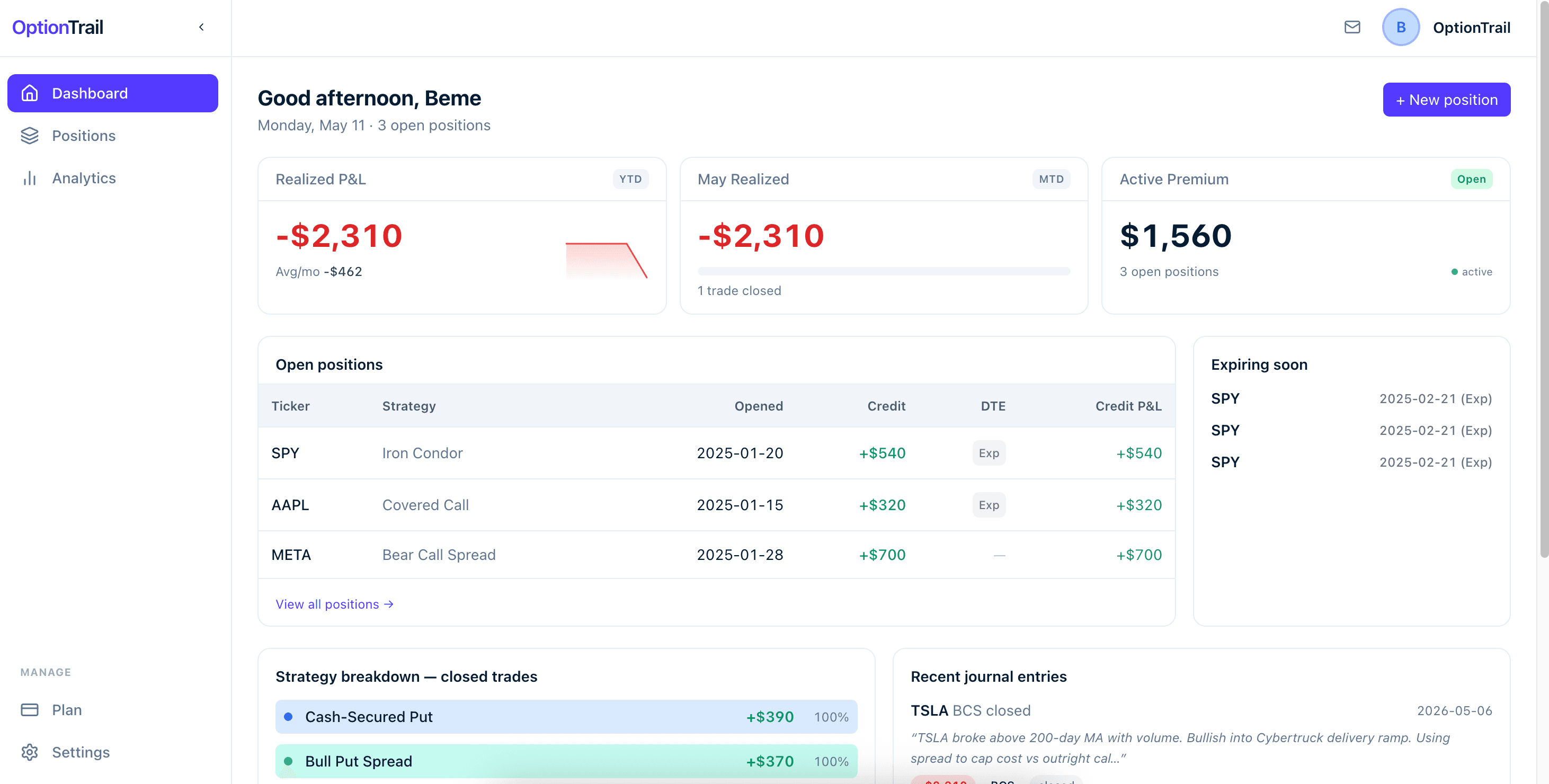
Log the capital commitment, not just the credit
A premium figure alone does not explain the context of a short put. The journal should make it clear which strike was sold, how many contracts were open, when they expired, and how much capital was intentionally reserved for the position.
This creates a better review record when two trades have similar credits but meaningfully different strikes, expiries, or position sizes.
- Ticker, short put strike, expiry, and contracts
- Premium received and opening date
- Capital reserved and whether assignment fits the original plan
Separate an income trade from an acquisition plan
A cash-secured put can be opened because the trader wants premium, wants shares at a lower effective entry, or is responding to a volatility event. Capture which of those applies before the position changes.
The note can also state what would justify taking profits early, rolling the contract, or accepting assignment. This makes later management choices reviewable without pretending that one outcome was inevitable.
Review assignment as a planned outcome or a deviation
When the position closes, write whether it expired, was bought back, was rolled, or was assigned. If shares were assigned, link the result to the next covered-call or stock position so the trading history remains connected rather than fragmented across separate rows.
Practical checklist
Cash-secured put review checklist
A consistent entry process makes it easier to compare similar put-selling decisions later.
- 1Record the intended role of the trade: income, acquisition, or both.
- 2Log strike, expiry, premium, contracts, and capital reserved.
- 3Write whether receiving shares at the strike is acceptable.
- 4Capture any close or roll and the reason it occurred.
- 5Link an assigned position to the resulting stock or covered-call record.
Reference material
Sources for options education
These references explain foundational terminology and risks. They are provided for education, not as recommendations.